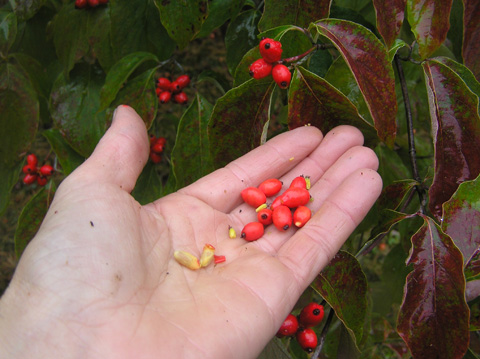
Dogwood fruits ready for collecting in September after they have turned bright red.
Clean pulp from seed before planting or storage.
Species Name: Cornus florida
Common Name: Flowering Dogwood
Zone: 4 to 8
Distribution:
Seed handling: FD seed is surrounded by a nutritious pulp that needs to be removed before planting or storing. Clean seed soon after collecting. Fruits can be held in plastic bags for a one to two weeks to hasten rotting and softening of the pulp. This will aid the cleaning process. When the pulp is softened, macerate fruits by hand. Large batches can be macerated using a food processor. Blend until the skins and pulp are pureed. Processing will not damage the hard pits. Separate the pulp and skins from the seeds by floating off the waste. Sound seeds will sink to the bottom of the container and aborted seed, skins and pulp can be poured off with several changes of water until only sound seed remains. Cleaned seed should be stratified if seed will not be immediately planted. Place seed in moist potting mix then provide 2 to 3 months of cold temperatures to satisfy the chilling requirement of the seed.
Germination requirements: A high percentage of FD seed will germinate in early spring. Stratified seed needs to be watched closely for early germination. Sow seeds ¼”-1/2” deep in prepared seedbeds or in natural soil. Seedlings will grow from a few inches up to 6” the first year. Seedlings can be transplanted when dormant and large enough to move. Seedlings require partial shade the first year but will tolerate full sun after that.
Ecology: Cornus florida is an important understory tree in forests throughout the eastern United States. CF produces nutritious fall and winter food resources for migrating songbirds. CF has suffered significant mortality and decline in recent decades from an introduced pathogen called Dogwood anthracnose. Anthracnose is an introduced fungal disease that has affected dogwood populations throughout the dogwood’s range and inflicted significant mortality. Seed from surviving plants should be collected and dispersed to increase wild populations and help preserve local ecotypes that may be resistant to the disease. Dogwood grows best on deep moist well drained soils. It can also be found in upland forests with average moisture. Dogwood likes sheltered locations protected from excessive wind. Dogwood also prefers growing along forest edges, forest openings and hedgrows where it flowers and fruits more prolifically with the additional sunlight.
Dogwood should be encorouaged both for its important wildlife value as well as great ornamental features. Cornus florida seed should be collected from wild grown plants wherever possible and widely planted in all suitable habitats. This will help inicrease the abundance of dogwood in the wild and reintroduce it into human disturbed landscapes.
Dogwood fruits ready for collecting in September after they have turned bright red.
Clean pulp from seed before planting or storage.
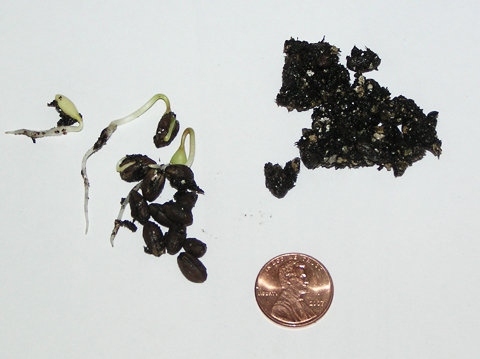
Dogwood seed germinating after stratification.
this page posted January 5th, 2011