American Beautyberry
(Callicarpa americana)
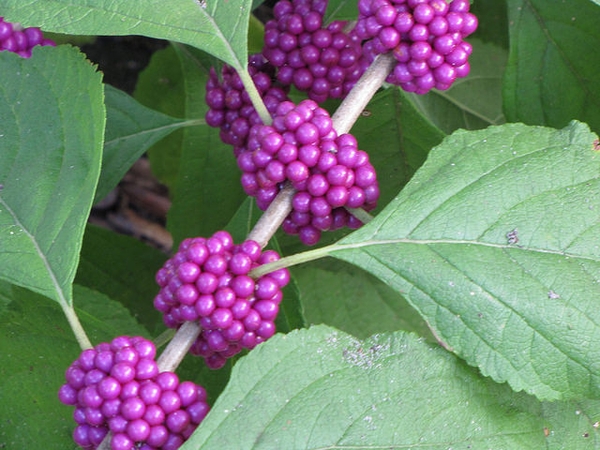
Callicarpa americana branch with berries by Forest and Kim Starr CC BY 2.0. Found at plants.ces.ncsu.edu/plants/callicarpa-americana/
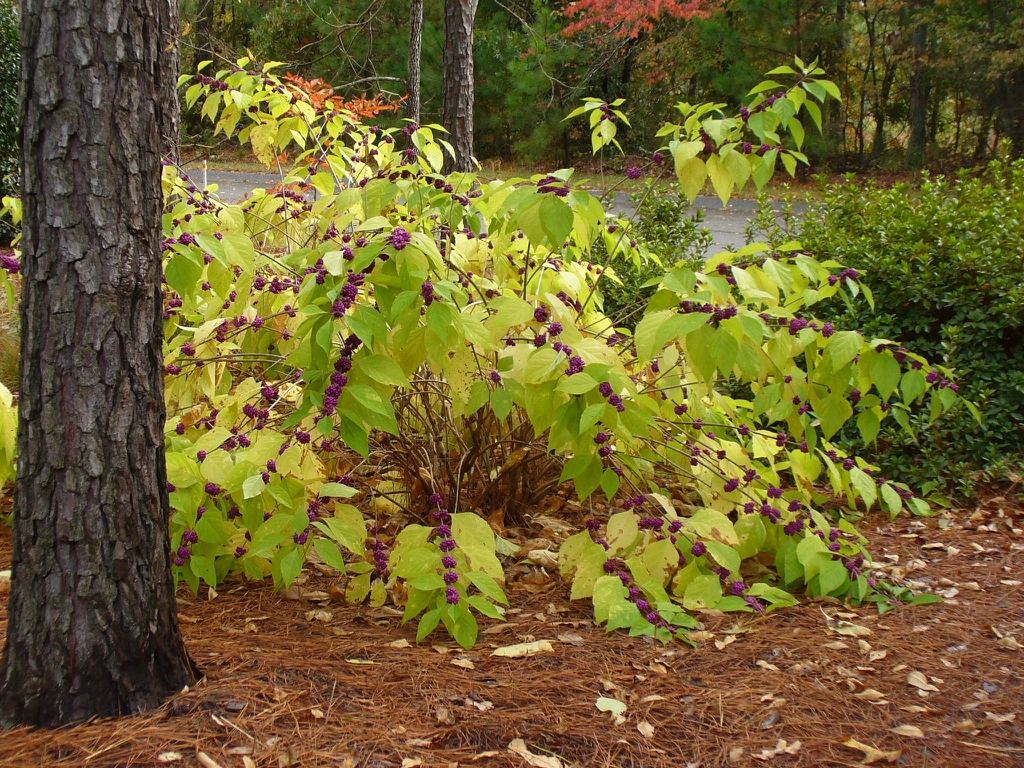
American beautyberry is a wonderful, long lived, large shrub with a naturally loose and graceful arching form. Clusters of magenta purple berries develop from August through October and encircle the stem.
Use for mass plantings, large yards, pollinator gardens, naturalized areas, pond margins and woodlands.
Ornamental features:
- The most striking feature is the clusters of glossy, iridescent-purple fruit which hug the branches at leaf axils in the fall and winter.
- It has long, naturally graceful arching branches and yellow-green fall foliage.
- Prune in late winter or early spring 6 to 12” high to encourage compact growth and fruiting as the flowers and fruits appear on current year’s growth.
- Easy to propagate from seed or cuttings.
Wildlife value:
- Beautyberry fruits are high in moisture and are an important source of food for many species of birds, including bluebirds, mockingbirds, robins, and towhees. Some fruit may last through early winter.
- Beautyberry’s native habitat is open meadows, thickets,open woodlands and margins of ponds, ditches and streams.
- The plants are readily browsed by deer and rabbits but will respond by sprouting new growth.
Horticulture profile:
- Zone 5 or 6 to 10. While some cold winter injury will occur in colder regions, it readily regrows from the roots. Native from Maryland south.
- Grows 3-8 feet tall and 3 to 6 feet wide.
- The shrub prefers full sun to part shade. Intolerant of deep shade.
- Tolerant of all types of soil from sand to clay provided it has good drainage.